
So Much for Ladies First: Bumble Gives Men the Opening Move

After twelve years of “women first,” Bumble handed the opening line back to men and hoped nobody would ask what makes the app special now.
Bumble finally let men message first, which is fucking hilarious because women messaging first was Bumble.
That was the product. That was the slogan. That was the whole yellow-bee-shaped reason it existed. Without that rule, Bumble was basically Tinder after a TED Talk—same horny people, nicer color palette, and just enough corporate feminism to make swiping on strangers feel like community service.
For twelve years, the app proudly flipped the script. Women would take control. Women would initiate. Men would stop barging into inboxes with “hey sexy” and photos of their genitals taken from angles normally reserved for documenting water damage.
Then Bumble surveyed women and discovered nearly 66% preferred men to send the first message.
Holy shit.
You build an entire company around women making the opening move, and two-thirds of the women reportedly respond, “That sounds empowering. Could he do it instead?” That is like opening a vegan steakhouse and learning your customers would really prefer the ribeye.
So Bumble changed the rules. Opening Moves are gone. Now either person gets one opening message before the chat unlocks, and matches have 72 hours to start instead of 24. Bumble calls this flexibility. Critics call it Tinder with a yellow background. I call it the fastest corporate identity crisis since Bud Light briefly forgot who drank Bud Light.
And the timing? Bumble Inc.’s second-quarter 2026 revenue fell 15.2% year over year to $210.5 million, while total paying users dropped 16.4% to 3.2 million. Apparently nothing makes a company reevaluate twelve years of principles faster than customers leaving with their credit cards still warm.
Now, this does not mean the change is bad. It may actually make Bumble better. But it does raise one beautifully uncomfortable question:
If men can message first, what the fuck is Bumble now?
Bumble Removed Its Entire Personality and Called It Growth
Bumble’s original rule solved a legitimate problem. Women on dating apps were drowning in garbage messages from men who thought “You up?” was a personality and sending an unsolicited dick pic was somehow the digital equivalent of presenting flowers.
Giving women control of the first message created a gate. A match did not automatically grant Chad permission to kick open the inbox wearing nothing but confidence and poor lighting. Women decided which conversations began, and men had to wait.
That distinction was clear. Tinder was the crowded nightclub where everybody screamed over each other. Bumble was the nightclub where the woman decided whether the velvet rope opened.
Now everybody gets one knock at the door.
Maybe that produces better conversations, but it also leaves Bumble searching for a personality like a divorced dad standing in Target holding a decorative pillow. What does the app uniquely offer now?
“Meaningful connections”? Every dating app says that while charging $29.99 to show you people who already rejected you.
“Safety”? Important, absolutely—but every platform claims safety right beneath a terms-of-service agreement nobody has read since the invention of thumbs.
“Dating built around women”? Fine, but if the defining women-first mechanism is gone, Bumble needs to explain what that means beyond using warm language and photographing attractive people laughing near houseplants.
Imagine Hooters removing the waitresses and announcing, “We remain committed to the wing-forward experience.” Sure, the wings still exist, but let’s not pretend nobody noticed the business model changed.
Bumble says it is evolving around what women want. That is a valid defense. Empowerment should mean having choices, not being assigned homework by an app. If many women find initiating exhausting, forcing them to do it merely to preserve branding is stupid.
But it is still funny as hell. Bumble spent years telling society, “Women should make the first move,” then society replied, “We support that completely—right after this man makes the first move.”
That is not a minor product update. That is the dating-app version of building a church and later discovering the congregation would prefer bowling.
Equality Apparently Ends at the Opening Line
Before everybody starts sharpening pitchforks, wanting men to initiate does not make women hypocrites. People can believe in equal rights and still enjoy traditional courtship. Equality means a woman can approach a man. It does not mean she has to march across Applebee’s and deliver a legally compliant opening statement every time she finds somebody attractive.
Attraction is not a workplace seminar. Nobody gets horny because the romantic labor was distributed according to a balanced quarterly matrix.
Many women want a man to show confidence, demonstrate interest, and risk rejection. Fair enough. Men have been performing that little emotional circus since puberty, usually with all the grace of a shopping cart missing one wheel.
Bumble briefly gave women the same assignment, and plenty of opening messages were:
“Hey.”
Or, for the adventurous ones:
“Heyyy.”
Three Y’s. Somebody call the fire department; this conversation is out of control.
The woman technically initiated, but the man still had to pick up the shovel and dig for a personality.
“How’s your day?”
“Good lol.”
“Doing anything fun this weekend?”
“Maybe.”
This is not flirting. This is a hostage negotiator checking whether the captive is still alive.
Men are told to write something original based on her profile. Great advice—until the profile contains three selfies, a champagne glass, and the sentence “I love tacos, travel, and laughing.” Congratulations, you have described every woman on Earth who is not actively imprisoned.
Then the opener must be funny but not corny, confident but not cocky, sexual but not creepy, interested but not desperate, and personalized without revealing that you looked too closely. Basically, men are expected to land a passenger jet on a folding table while Jessica evaluates the effort from a profile that says, “Make me laugh.”
Meanwhile, men are no angels. Give some guys first-message access and they will immediately prove why Bumble installed the original gate. Within six minutes, someone named Brayden will type “sit on my face” beneath a photo of himself holding a bass.
So yes, women have valid reasons to want control. They also have valid reasons to prefer initiative. The point is not that either sex is wrong. The point is that human attraction remains inconveniently traditional in some places, modern in others, and completely unwilling to follow whichever social-media infographic was posted this morning.
The Users Started Leaving, and Suddenly Tradition Was Empowering
Bumble says the change responds to user feedback. I believe them. I also believe the 16.4% decline in paying users probably spoke with the clarity of a gunshot in a library.
Total paying users fell to 3.2 million in the second quarter of 2026. Revenue dropped 15.2% to $210.5 million. Average revenue per paying user rose slightly, which means Bumble managed to squeeze a little more money from the people still inside while everybody else escaped through the emergency exit carrying their emotional baggage.
The company also forecast third-quarter revenue below Wall Street expectations. Reuters previously reported Bumble was exploring a possible sale, although nothing was guaranteed.
So when Bumble says, “We listened,” perhaps it did. Corporations develop extraordinary hearing when quarterly revenue starts coughing blood.
Still, the financial pressure does not automatically make the update bullshit. If a restaurant is losing customers because the food tastes like upholstered ass, changing the recipe is not betrayal. It is survival.
And Bumble’s testing reportedly showed improvements. Mutual chats increased, fewer conversations expired, and fewer people unmatched. Women experienced more than twice the increase in mutual-chat rate that men did under the updated policies, according to company figures shared with ABC News.
That matters. Dating apps are supposed to help people talk—not operate as expensive thumb gyms where users swipe until their self-esteem develops carpal tunnel.
The new 72-hour window is also more realistic. The old 24-hour clock treated a dating match like a live grenade. Maybe she was working. Maybe he had his kids. Maybe somebody wanted to think before beginning a conversation with a stranger who listed “fluent in sarcasm” as a marketable skill.
But do not miss the larger joke: Bumble tried to reprogram heterosexual dating, and heterosexual dating eventually dragged Bumble into the parking lot and reprogrammed it back.
The company did not defeat traditional pursuit. It placed it on administrative leave until the subscriber numbers got scary.
Men Messaging First Won’t Fix People Being Boring as Shit
The new rules may increase conversations, but they cannot make those conversations worth having.
Men can now initiate. Wonderful. Half will write thoughtful openers. The other half will send “wyd,” “damn,” or a fire emoji at 11:48 p.m. while lying in bed wearing basketball shorts that have not seen a basketball since the Obama administration.
Women no longer have to initiate. Wonderful. Some will actively participate. Others will answer every question with one syllable and later tell their group chat, “There just wasn’t any chemistry.”
Chemistry? Ma’am, you communicated like a malfunctioning Magic 8 Ball.
The real problem was never simply who sends message number one. It is whether both people contribute after that. Does she ask anything back? Does he listen instead of waiting to mention his dick? Does either person suggest meeting before the chat becomes a six-week pen-pal program conducted entirely through reaction emojis?
Initiative matters. Reciprocity matters more.
If a man opens with a personalized question and receives “lol yeah,” he is not failing to lead. He is attempting to jump-start a refrigerator. If a woman sends a clever opener and he immediately turns the conversation sexual, she is not uptight. He just has the romantic patience of a Labrador watching somebody unwrap cheese.
Bumble cannot code around that shit. Tinder cannot. Hinge cannot. An AI dating assistant cannot crawl inside a boring adult and install curiosity.
The best part of Bumble’s update is choice. Interested men no longer have to stare helplessly at an expiring match. Interested women can still initiate. Nobody needs to follow a ceremonial gender rule merely because a yellow app declared it progress.
The worst part is Bumble surrendered the easiest answer to “Why should I download this instead of Tinder?” Now it must prove that its community, safety systems, match quality, and culture are genuinely different—not merely the same dating-app casino with friendlier wallpaper.
So where do you stand? Did Bumble improve dating by letting men message first, or did it rip out the only thing separating it from every other digital meat market? Do women want equality in making the first move—or mainly the option to do it when the man is hot enough? Men, did Bumble’s old rule reduce pressure, or did “Heyyy” just hand the conversational labor back to you wearing a tiny feminist hat?
Drop your verdict in the comments. And use complete sentences—we have endured enough low-effort openers for one lifetime.
Follow Whiskey’d & Uncensored on our socials, catch up on previous blogs, and share this post with your friends and favorite sites—especially the person who demanded modern dating roles until it became their turn to risk rejection. If you enjoyed the post, please consider a donation below to help offset the cost of these ever-growing expensive servers. These aren’t paid posts, and every little bit keeps the entertainment flowing. Give us your thoughts and opinions in the comments!
Also, don’t forget to stop by whiskeydanduncensored.com/fun-custom-products for all-new, fun, lighthearted products that prove you have an excellent sense of humor.


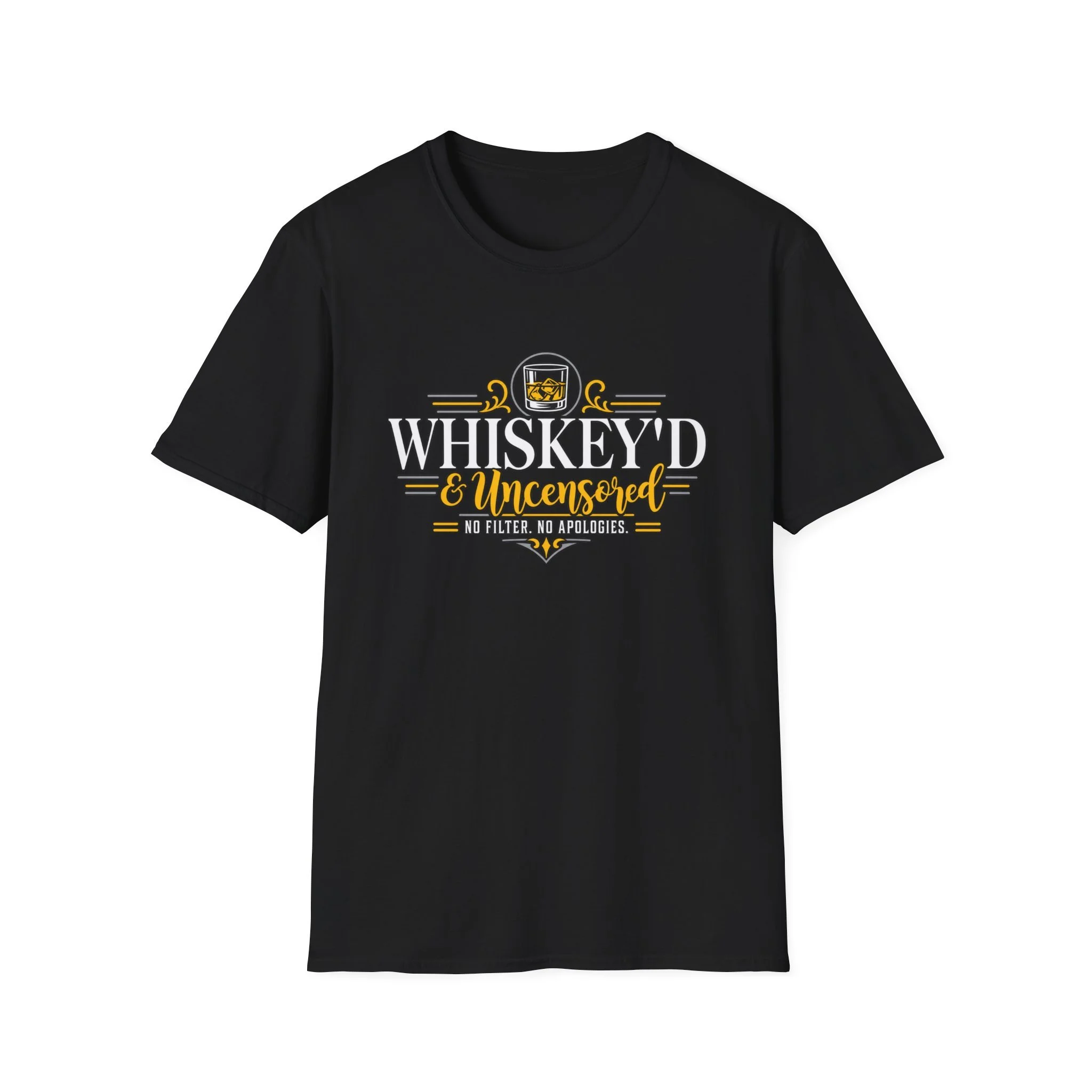
Product features
- 100% ring-spun cotton (lightweight 153 g/m²) — soft and breathable
- Tubular knit with no side seams for a smooth, waste-reducing fit
- Ribbed collar with shoulder tape to hold shape and prevent stretching
- Print methods: Direct-to-Garment for main art; Direct-to-Film for sleeve/neck details
- OEKO-TEX® STANDARD 100 certified and EU 2-year warranty
Care instructions
- Do not dryclean
- Do not bleach
- Tumble dry: low heat
- Iron, steam or dry: low heat
- Machine wash: cold (max 30C or 90F), with similar colors